
Can I Run VRLab Academy: Anatomy VR?
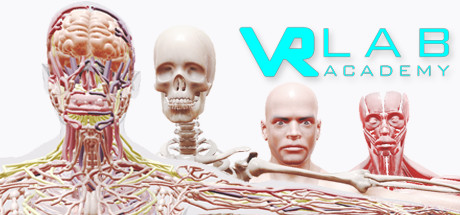
VRLab Academy: Anatomy VR is an interactive anatomy atlas. Walk through the futuristic VRLab. Navigate smoothly and effortlessly, in this beautiful. and modern yet highly optimized Vr experience See...
Can your PC run it? →System requirements
Minimum requirements
| CPU | Windows™ 7 SP1, Windows™ 8.1 or later or Windows™ 10 |
|---|---|
| GPU | NVIDIA GeForce GTX 970 or AMD Radeon R9 290 or better |
| RAM | 0 GB |
| OS | Intel Core i5 4590 or AMD FX 8350 or greater |
| DirectX | Version 10 |
Recommended requirements
| CPU | Windows® 8.1 or later, Windows® 10 |
|---|---|
| GPU | NVIDIA GeForce GTX 1060 or AMD Radeon RX 480, equivalent or better |
| RAM | 0.01 GB |
| OS | Intel Core i5 4590 or AMD FX 8350 or greater |
| DirectX | Version 11 |
Single source, verify with the publisher source
Scores are deterministic, computed by fixed rules and benchmark tables, not written by an AI. How we score. Maintained by Farhad Ali. Spotted a wrong specification? Tell us.
Can you run VRLab Academy: Anatomy VR?
Older hardware holds up here: VRLab Academy: Anatomy VR runs on modest graphics, with NVIDIA GeForce GTX 970 or AMD Radeon R9 290 or better enough to meet the minimum. Add a mid-range CPU and a PC several years old will play it fine.
Bottleneck: GPU
Projected by resolution
| Resolution | Projection | Headroom |
|---|---|---|
| 1080p | Comfortable | 1.93x |
| 1440p | Borderline | 1.09x |
| 4K | Below the bar | 0.48x |
A projection, not a measurement. We scale the published GPU requirement by pixel count, since 1440p draws 1.78 times the pixels of 1080p and 4K draws 4 times as many, then compare against RTX 3060 / Ryzen 5 build. The publisher did not state a target resolution, so 1080p is assumed as the baseline. We hold no frame rate data, so no FPS figure is claimed. Headroom above 1 means the reference machine has room to spare at that resolution.
Common GPUs
| Graphics card | Verdict |
|---|---|
| GTX 1060 6 GB | Runs great |
| GTX 1060 Laptop | Runs great |
| GTX 1650 4 GB | Runs well |
| GTX 1650 Laptop | Runs well |
| RTX 2060 6 GB | Runs great |
| RTX 2060 Laptop | Runs great |
| RTX 3060 12 GB | Runs great |
| RTX 3060 Laptop | Runs great |
| RTX 4060 8 GB | Runs great |
| RTX 4060 Laptop | Runs great |
| RTX 3070 8 GB | Runs great |
| RTX 3070 Laptop | Runs great |
| RTX 4070 12 GB | Runs great |
| RTX 4070 Laptop | Runs great |
| RX 6600 8 GB | Runs great |
Each card is compared against VRLab Academy: Anatomy VR's published GPU requirement, assuming an otherwise-capable PC. Laptop rows use the real mobile chip's benchmark, a mobile GPU is always slower than its desktop namesake.
Find more you can run
See everything your PC can run →Frequently asked questions
Can my PC run VRLab Academy: Anatomy VR?
Upload your DxDiag file to Idxdiag's free checker and get a component by component compatibility verdict for VRLab Academy: Anatomy VR in seconds. No install required.
What are the minimum system requirements for VRLab Academy: Anatomy VR?
The minimum requirements are CPU: Windows™ 7 SP1, Windows™ 8.1 or later or Windows™ 10; GPU: NVIDIA GeForce GTX 970 or AMD Radeon R9 290 or better; 0 GB RAM; OS: Intel Core i5 4590 or AMD FX 8350 or greater.
Can an RTX 3060 run VRLab Academy: Anatomy VR?
The RTX 3060 runs VRLab Academy: Anatomy VR comfortably, clearing the title's GPU requirement with room to spare.
What is the bottleneck for VRLab Academy: Anatomy VR?
On a typical modern PC (Ryzen 5 5600, RTX 3060, 16 GB RAM), the tightest component for VRLab Academy: Anatomy VR is the GPU.