
Can I Run Take On Mars?
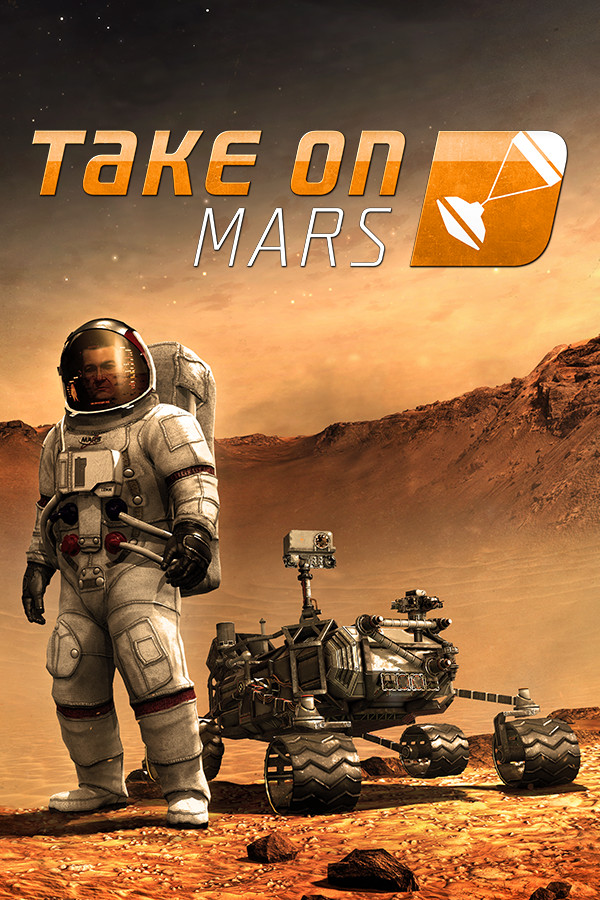
Take On Mars is a simulation game from Bohemia Interactive, released in 2017. Bohemia Interactive both developed and published it. The game supports a single player campaign and cooperative play. A pad covers most of the game, though parts of it still expect a keyboard. Being 9 years old, it was built for the hardware of its day, so a current machine usually has headroom over the published figures. Steam Workshop support means community content is part of the picture, and a heavy mod load can push the real requirements past anything the publisher lists. It is a Windows title, so the requirements below are the Windows ones. Its Metacritic score stands at 62. Completionists have 40 achievements to work through. Its Steam review count passes 1 thousand, a large enough sample that odd hardware behaviour would be known by now.
Can your PC run it? →System requirements
Minimum requirements
| CPU | Intel Core2Duo 2.5 GHz or AMD Athlon Phenom X4 or faster |
|---|---|
| GPU | NVIDIA Geforce 8800GT or ATI Radeon HD 3870 with Shader Model 3 and 512 MB VRAM, or faster |
| RAM | 2 GB |
| Storage | 6 GB |
| OS | Windows 10 |
| DirectX | 9 |
Recommended requirements
| CPU | Intel Core i5 or AMD Athlon Phenom X4 or faster |
|---|---|
| GPU | NVIDIA GeForce GTX 560 or AMD Radeon HD 7750 or faster |
| RAM | 4 GB |
| Storage | 6 GB |
| OS | Windows 10 |
| DirectX | 9 |
Verified from Steam · 9 Jul 2026 source
Scores are deterministic, computed by fixed rules and benchmark tables, not written by an AI. How we score. Maintained by Farhad Ali. Spotted a wrong specification? Tell us.
Setting and environment
Take On Mars places its action in space and the vessels that cross it, and the player works through spaces built for exploration. 20 storefront images show what the game actually looks like in motion. Play is presented from a first person view. That openness is what costs performance. Take On Mars has no loading walls to hide behind, so terrain and detail keep flowing in as the player moves.
Why Take On Mars is demanding
At 4 GB, system memory is undemanding. Take On Mars takes about 6 GB of disk space. The DirectX requirement is undemanding, at version 9.
This reading comes from the published requirements and our own benchmark tables, not from the store listing.
Can you run Take On Mars?
Take On Mars targets a mainstream modern PC: NVIDIA Geforce 8800GT or ATI Radeon HD 3870 with Shader Model 3 and 512 MB VRAM, or faster and 2 GB of RAM for the minimum, stepping up to NVIDIA GeForce GTX 560 or AMD Radeon HD 7750 or faster for the recommended experience. No single part dominates the requirements, so a balanced mid-range build clears it.
Bottleneck: CPU
Similar games you can run
See everything your PC can run →



Frequently asked questions
Can my PC run Take On Mars?
Upload your DxDiag file to Idxdiag's free checker and get a component by component compatibility verdict for Take On Mars in seconds. No install required.
What are the minimum system requirements for Take On Mars?
The minimum requirements are CPU: Intel Core2Duo 2.5 GHz or AMD Athlon Phenom X4 or faster; GPU: NVIDIA Geforce 8800GT or ATI Radeon HD 3870 with Shader Model 3 and 512 MB VRAM, or faster; 2 GB RAM; OS: Windows 10.
How much storage does Take On Mars need?
Take On Mars needs about 6 GB of available storage.
What is the bottleneck for Take On Mars?
On a typical modern PC (Ryzen 5 5600, RTX 3060, 16 GB RAM), the tightest component for Take On Mars is the CPU.