
Can I Run Heavy Fire: Afghanistan?
Released in 2014, Heavy Fire: Afghanistan is an action game built by Teyon. Publishing duties went to Mastiff. It offers a single player campaign and competitive multiplayer. Progress follows the account through Steam Cloud rather than sitting on one disk. It keeps shared screen play alive, so a second player needs only a second controller. Only some of the game is mapped to a controller. It carries 27 achievements. It is old enough that no current GPU generation existed when it shipped, so modern hardware tends to be far past what it can use. Windows is the only supported platform, which is what the figures below describe. With only 201 reviews on Steam, there is little community data on how it behaves across hardware. It is localised into 5 languages according to the store listing.
Can your PC run it? →System requirements
Minimum requirements
| CPU | Intel® Pentium® 4 CPU 3.00GHz or similar AMD Athlon 64 |
|---|---|
| GPU | Direct3D 10 capable video card (NVIDIA® Geforce 8800 GT or AMD® Radeon™ HD 3870 or above) with at least 512 MB video memory. Some low-end integrated cards may not work. |
| VRAM | 0.5 GB |
| RAM | 1.46 GB |
| Storage | 3 GB HDD |
| DirectX | Version 9.0c |
Recommended requirements
| CPU | Core 2 Duo or similar AMD Athlon X2 |
|---|---|
| GPU | Direct3D 11 capable video card (NVIDIA® Geforce GTS 450 or AMD® Radeon™ HD 5670 or above) with at least 512 MB video memory. Low-end integrated and laptop cards are not recommended. |
| VRAM | 0.5 GB |
| RAM | 3.91 GB |
| Storage | 3 GB HDD |
| DirectX | Version 9.0c |
Verified from Steam · 20 Jul 2026 source
Scores are deterministic, computed by fixed rules and benchmark tables, not written by an AI. How we score. Maintained by Farhad Ali. Spotted a wrong specification? Tell us.
Setting and environment
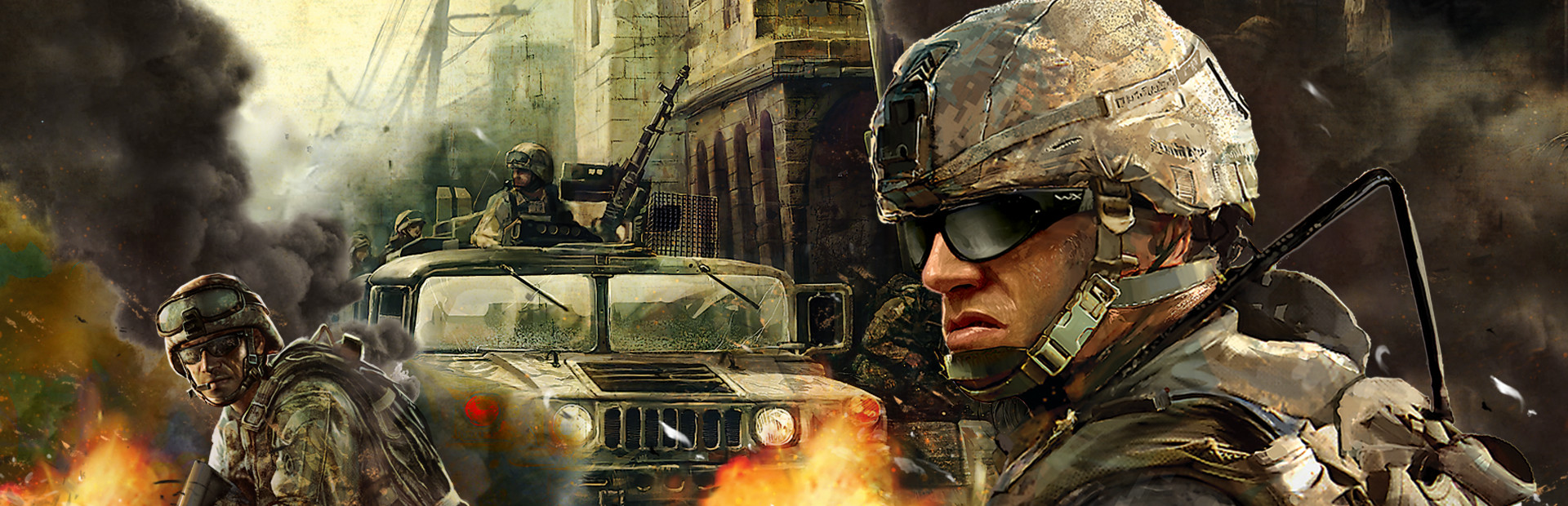
Heavy Fire: Afghanistan places its action in a military setting, and the player works through combat arenas. The view is from a first person view. The publisher supplies 9 storefront screenshots of these environments.
Why Heavy Fire: Afghanistan is demanding
Heavy Fire: Afghanistan needs only 0.5 GB of video memory. The install is small at roughly 3 GB. System memory expectations are modest at 3.91 GB. It targets DirectX 9.0, an older feature level that almost anything still running will satisfy.
This reading comes from the published requirements and our own benchmark tables, not from the store listing.
Can you run Heavy Fire: Afghanistan?
Heavy Fire: Afghanistan targets a mainstream modern PC: Direct3D 10 capable video card (NVIDIA® Geforce 8800 GT or AMD® Radeon™ HD 3870 or above) with at least 512 MB video memory. Some low-end integrated cards may not work. and 1.46 GB of RAM for the minimum, stepping up to Direct3D 11 capable video card (NVIDIA® Geforce GTS 450 or AMD® Radeon™ HD 5670 or above) with at least 512 MB video memory. Low-end integrated and laptop cards are not recommended. for the recommended experience. No single part dominates the requirements, so a balanced mid-range build clears it.
Bottleneck: RAM
Similar games you can run
See everything your PC can run →




Frequently asked questions
Can my PC run Heavy Fire: Afghanistan?
Upload your DxDiag file to Idxdiag's free checker and get a component by component compatibility verdict for Heavy Fire: Afghanistan in seconds. No install required.
What are the minimum system requirements for Heavy Fire: Afghanistan?
The minimum requirements are CPU: Intel® Pentium® 4 CPU 3.00GHz or similar AMD Athlon 64; GPU: Direct3D 10 capable video card (NVIDIA® Geforce 8800 GT or AMD® Radeon™ HD 3870 or above) with at least 512 MB video memory. Some low-end integrated cards may not work.; 1.46 GB RAM.
How much storage does Heavy Fire: Afghanistan need?
Heavy Fire: Afghanistan needs about 3 GB of HDD storage.
What is the bottleneck for Heavy Fire: Afghanistan?
On a typical modern PC (Ryzen 5 5600, RTX 3060, 16 GB RAM), the tightest component for Heavy Fire: Afghanistan is the RAM.